



TOP
Proboscis Monkey
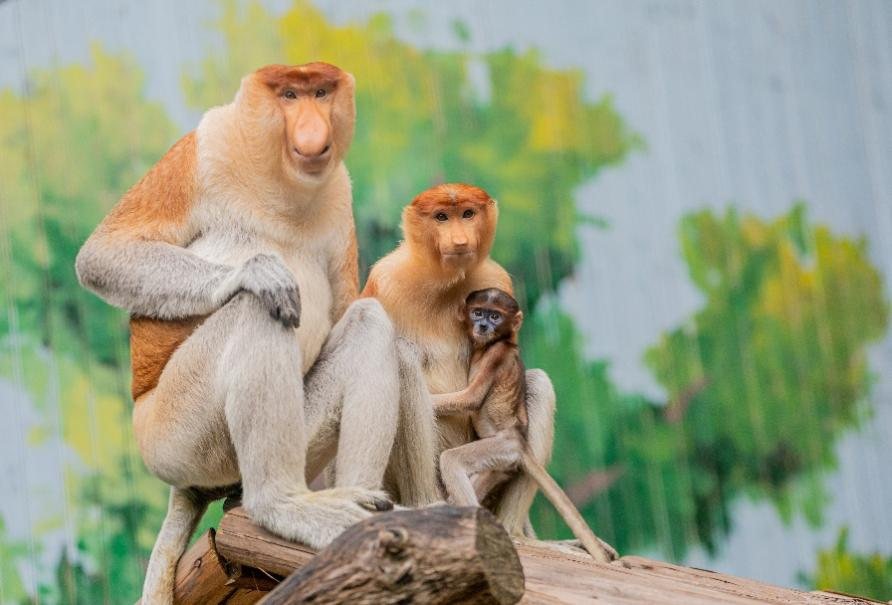
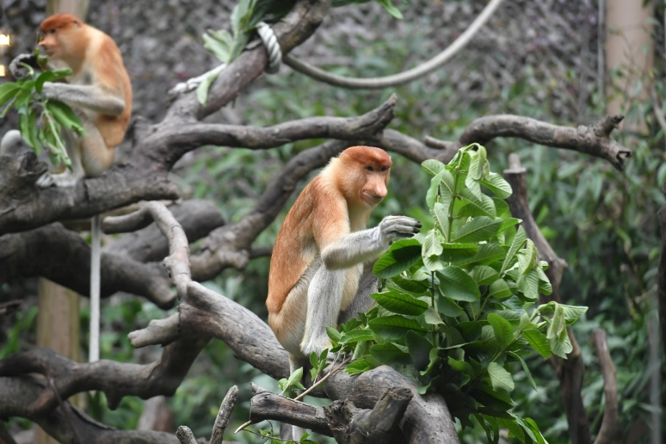
The proboscis monkey is a primate endemic to Borneo (Kalimantan). It is listed as Endangered (EN) on the IUCN Red List and included in CITES Appendix I. The most striking features of adult males are their long, pendulous noses and round, protruding bellies; females have much shorter noses. They inhabit riverine forests, mangroves and peat swamp forests. They are good climbers and can also dive and swim across rivers. Land reclamation, logging and habitat fragmentation are steadily damaging these riverine woodlands.
Chimelong initiated introduction of proboscis monkeys to China in 2017 and achieved the country’s first captive breeding in 2018. To date, 14 have been bred, and ours is the only park in China where they can be seen. Protecting proboscis monkeys also means protecting Borneo’s precious tropical rainforest and wetland ecosystems.
On-Site Science Education: Turning “Seeing” into “Understanding”
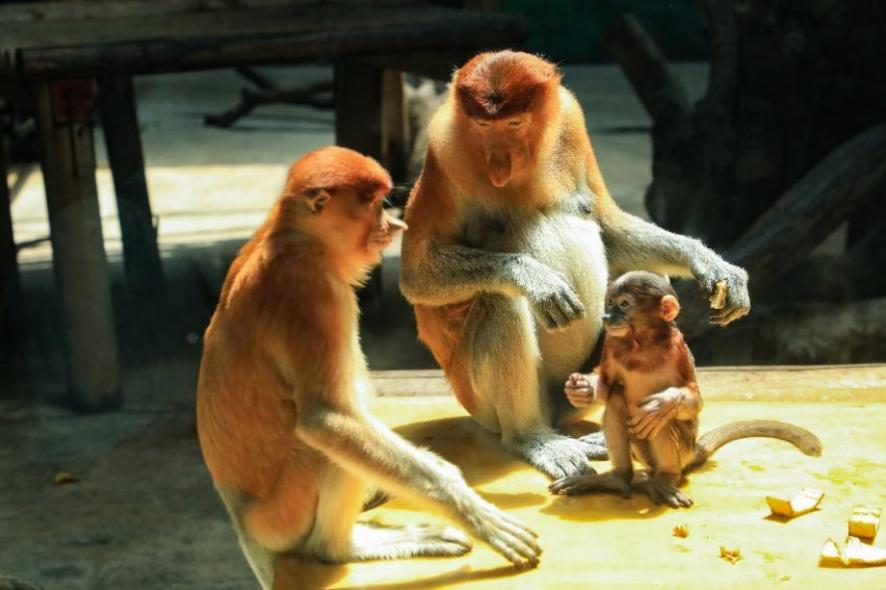
At Golden Monkey Kingdom in Chimelong Safari Park, Guangzhou, several hands-on science education stations have been set up. A leaf, a seed, a follow-up question—each can take our understanding of the rainforest beyond photos.
·Proboscis Monkey Science Education Station: Talks are held year-round. From leaf specimens to daily diet ingredients, the station explains clearly what they eat and why they eat that way.
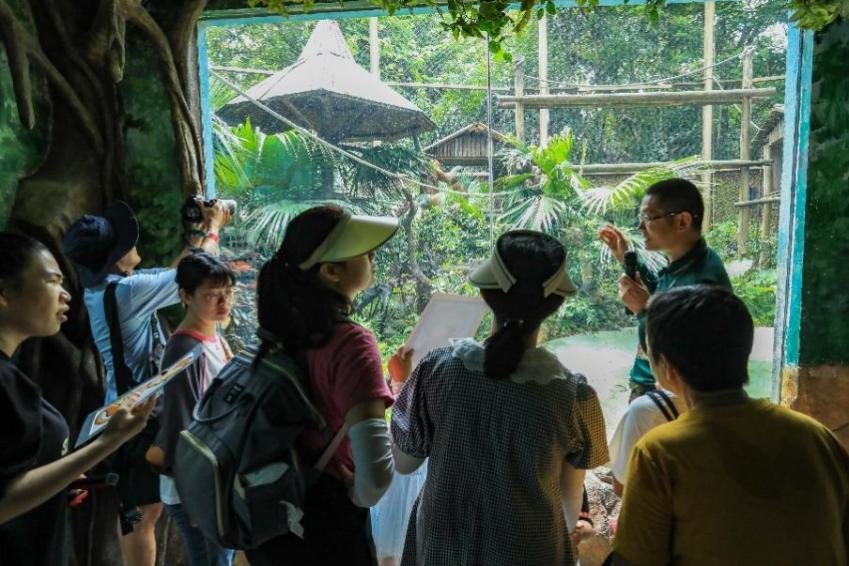
·Junior Keeper · Enrichment Class : Keepers first explain the day’s “menu”, then hide mulberry leaves and fruit in toys, creating food that requires thought to extract. Enrichment is not just play—it keeps foraging instincts from fading.
Fun Facts: Beyond the Big Nose
·What is the big nose for? The large nose of adult males is their most distinctive feature. It is related to sex and age and is also thought to be associated with individual communication and sound transmission.
·Why does the belly look so round? Their multi-chambered stomach relies on foregut microbes to ferment and digest fiber, similar to cattle and sheep but not true rumination. This allows them to use large amounts of plant food, and also means that under human care, food and nutrition must be carefully studied.
·Why are they good swimmers? Proboscis monkeys often live near rivers and swamp wetlands. They are the only leaf-monkey species with webbed feet and are strong swimmers able to cross water. Riverside forests are not only where they find food but also important habitat for avoiding predators and carrying out daily activities.
These unique habits also make the proboscis monkey a window into the ecology of Borneo’s tropical rainforests.
Scientific Research: Nearly 20 Years of Commitment to Establishing an Ex-situ Conservation Population
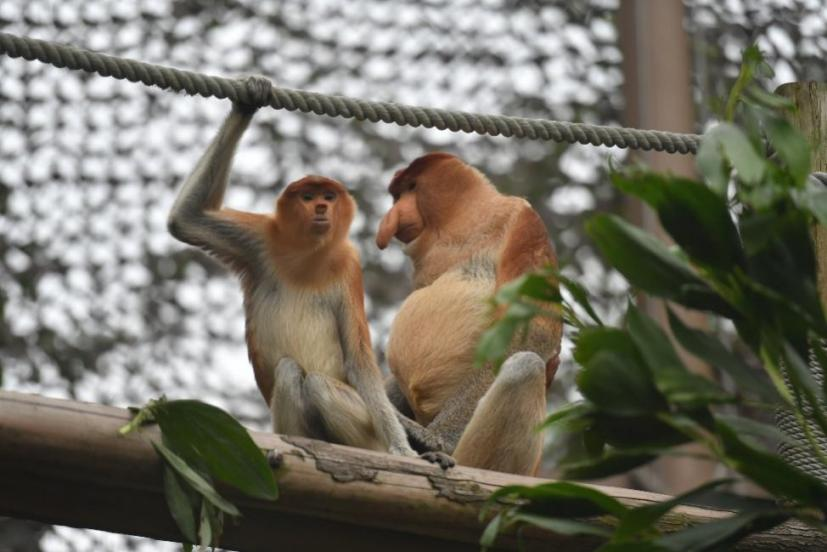
The Chimelong team recreated the native swamp riverbank: shallow water, muddy banks and staggered climbing frames. Here, proboscis monkeys feed, climb and enter the water, while grooming and vigilance continue as usual.
·A “Tailor-Made Menu” for Proboscis Monkeys
In response to the species’ special dietary needs, Chimelong continues to screen and cultivate food-source plants. More than 15 plant species suitable for them have been developed, providing a stable food source for daily care.
·More Professional and Less Stressful Health Checks
The research team has developed a dedicated ultrasound examination crate for proboscis monkeys, making it easier to carry out pregnancy diagnosis, fetal development monitoring and health assessment. This improves examination efficiency while reducing animal stress.
·From Successful Breeding to Refined Population Management
Through individual health records, studbook records and breeding management, Chimelong continuously tracks the health and breeding status of its proboscis monkeys and is gradually extending this work to kinship analysis, scientific pairing and genetic diversity management.
·Chimelong Also Invests in Basic Primate Research
In 2023, the project “Key Technologies and Applications for the Conservation of Germplasm Resources of Rare and Endangered Wild Animals” (including conservation technology achievements for proboscis monkeys and other primates) received the Special Prize of the 2022 Guangdong Provincial Science and Technology Award, providing technical support for the ex situ conservation of endangered primates.

In 2024, Chimelong led the Guangzhou Key R&D Program project “Research on Key Technologies for Breeding and Nutrition of Rare and Endangered Primates.”
In September 2025, it led the compilation and publication of Illustrated Guide to the World’s Primates (The Commercial Press).

These achievements form a complete technical system covering captive breeding, health monitoring and species science education, continuously contributing China’s practical experience to global conservation of endangered primates. By empowering conservation through research, Chimelong makes ex situ primate conservation experience accumulable and replicable.
Science Education: From a Single Encounter to Protecting an Ecosystem
Chimelong continues to share the proboscis monkey conservation story with the public.
·National Science Popularization Action Day · Newborn Monkey Visit
On the 2023 Science Popularization Action Day, the park opened a visit to a newborn proboscis monkey. Families made cartoon noses and listened to keepers recount the details of the infant’s birth, asking clearly “Why is the nose so big?”

·“Animal Poop Treasure Hunt” Results Exhibition
From undigested seeds in feces, visitors see how proboscis monkeys unintentionally disperse seeds: fruits are eaten, and seeds land on riverbanks far from the mother tree, completing seed dispersal by accident.

·May 20 Proboscis Pals · A Family Celebration
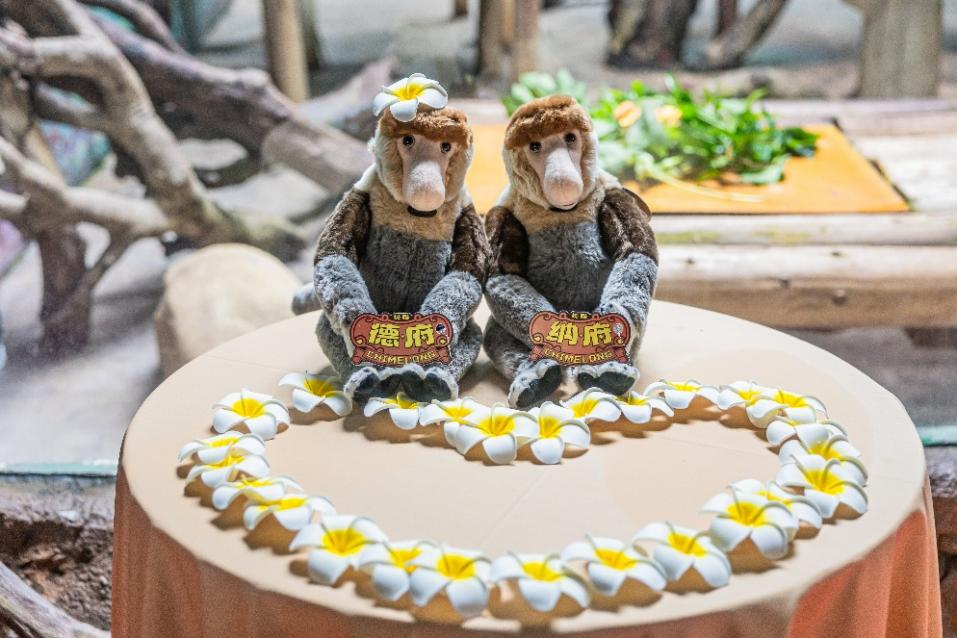
On May 20, 2025, Natoni (Dewa group) and Degulabi (Nakula group) held a group naming ceremony. This special “Proboscis Pals” event brought an endangered species into the public eye.
·Super Ape Festival
Proboscis monkeys and star families such as golden snub-nosed monkeys appeared together. The newborn proboscis monkey “Senyi” took part in a traditional zhuazhou (first-birthday choice) ceremony and was named on the spot.

·Academicians and Experts Lecture Series
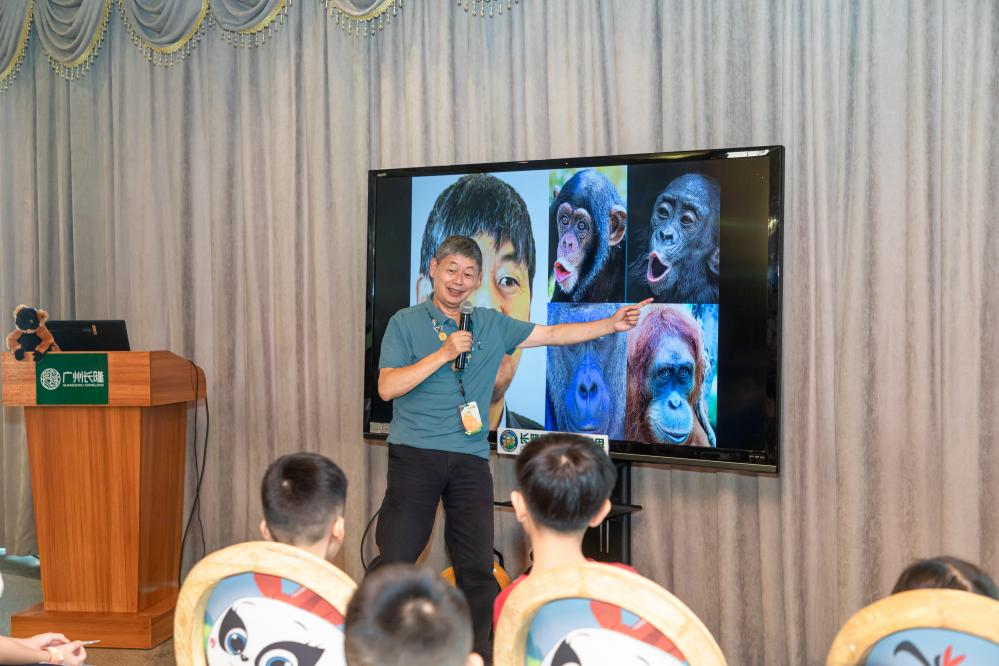
Chimelong regularly holds the Academicians and Experts Lecture Series on wildlife conservation. On August 31, 2022, Researcher Long Yongcheng, Honorary Advisor of the China Primatological Society, delivered the primate-themed “First Lesson of the New Semester” at Golden Monkey Kingdom, giving a science talk to young people under the theme “Apes, Monkeys and Forests.”
At the same time, Chimelong continuously works with leading primate scholars at home and abroad, including Professor Su Yanjie of Peking University (President of the Chinese Psychological Society), Professor Guo Songtao of Northwest University (President of the China Primatological Society), Professor Fan Pengfei of Sun Yat-sen University (Vice President of the China Primatological Society), Director Zhong Tai of Baima Snow Mountain National Reserve, and Professor Tetsuro Matsuzawa of Kyoto University (President of the International Primatological Society). Through lectures and academic exchanges, they share frontier knowledge on primate behavioral ecology, field patrols and species conservation, building a platform for dialogue between the public and conservation science.
The proboscis monkey’s situation is a clear equation: where the leaves are, the monkeys are; if the riverine forests disappear, the species loses its foundation. Protecting it has never meant protecting just one species.
Wild Population Recovery: From Ex-itu to In-itu Conservation
Through the Chimelong Charity Foundation, Chimelong continues to support in situ primate conservation worldwide:
- In 2020, it launched funding projects for cross-border conservation of Yunnan snub-nosed monkeys in Baima Snow Mountain and Cao Vit gibbons in Vietnam.
- In 2021, it partnered with and funded UN Tourism to carry out rescue, release and science education for primates and other wildlife in 15 African countries.
- In April 2024, it launched a project to protect endemic primates of the Mentawai Islands, Indonesia, providing funding and technical support for local field rescue station construction, population surveys and training of management and patrol staff.
Where to Meet the “Long-Nosed Gentlemen” of Borneo’s Rainforest
·Chimelong Safari Park, Guangzhou · Proboscis Monkey Exhibit at Golden Monkey Kingdom
This is China’s only ex situ conservation population of proboscis monkeys. Based on their native habitat, the exhibit recreates a swamp riverbank environment with climbing frames and a water play pool, showcasing daily behaviors such as feeding, climbing, playing in water and group interaction. A dedicated science station introduces their habits and conservation story.
·Chimelong Forest Kingdom, Qingyuan · Primate Valley
Qingyuan Chimelong has more leaf monkey species closely related to proboscis monkeys. Inspired by riverbank wetlands, it creates a natural viewing environment, shows the connection between proboscis monkeys and water and vegetation, and regularly offers themed science talks.