







TOP
Flamingos
Flamingos are among the most iconic birds of wetland ecosystems. With their dreamlike pink plumage, they are a unique sight over salt lakes and shallow shores. Wetland degradation, water pollution and human disturbance continue to threaten wild populations, making ex situ conservation and public education important paths for protecting them.
Chimelong has carried out flamingo conservation since 1997. The flamingos currently displayed in the parks mainly include three species: Greater Flamingo, Lesser Flamingo and Cuban Flamingo, with the Greater Flamingo forming the main population. Through systematic care, innovative scientific research and immersive experiences, Chimelong turns “seeing a bird” into “understanding a wetland.”
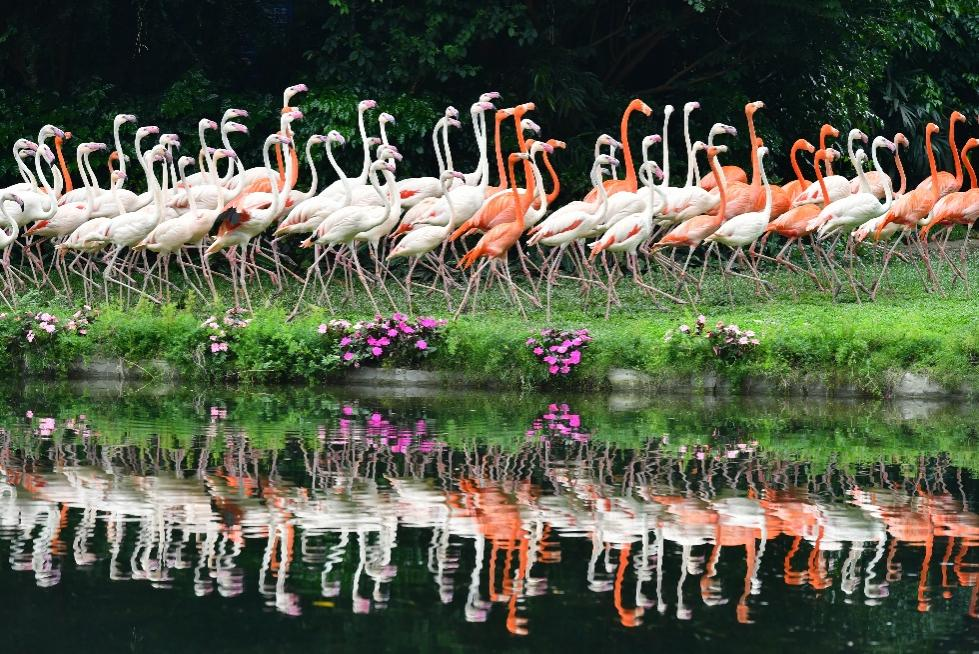
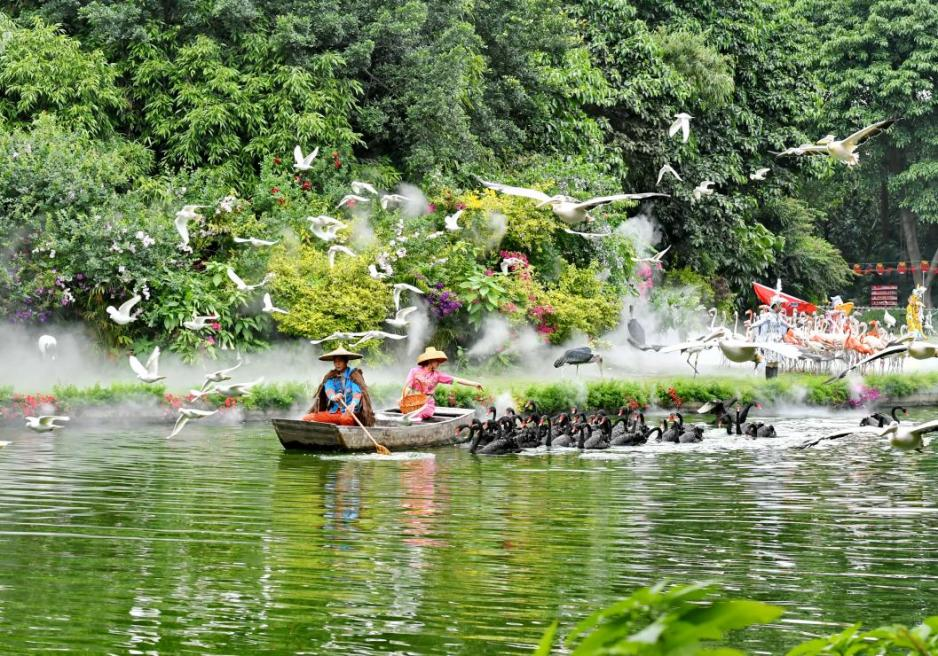
A Symphony of Birds at Chimelong Birds Park
Interactive Science Education: Bringing Wetland Nature Lessons into the Park
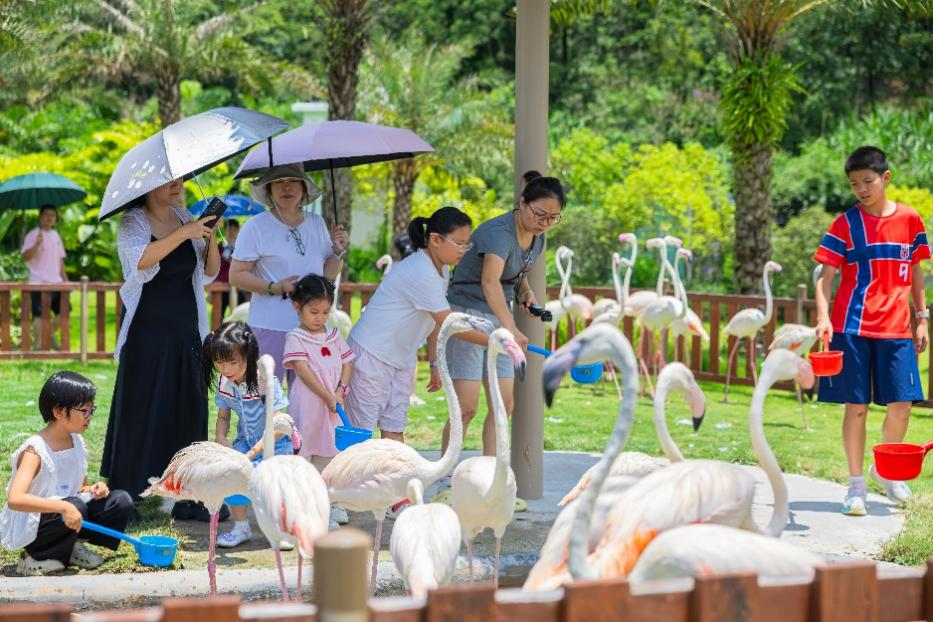
Visiting flamingos is more than a photo opportunity. Chimelong turns the flamingos’ daily routines into a nature lesson where children can join in, ask questions, and take the knowledge home with them.
·Junior Flamingo Keeper
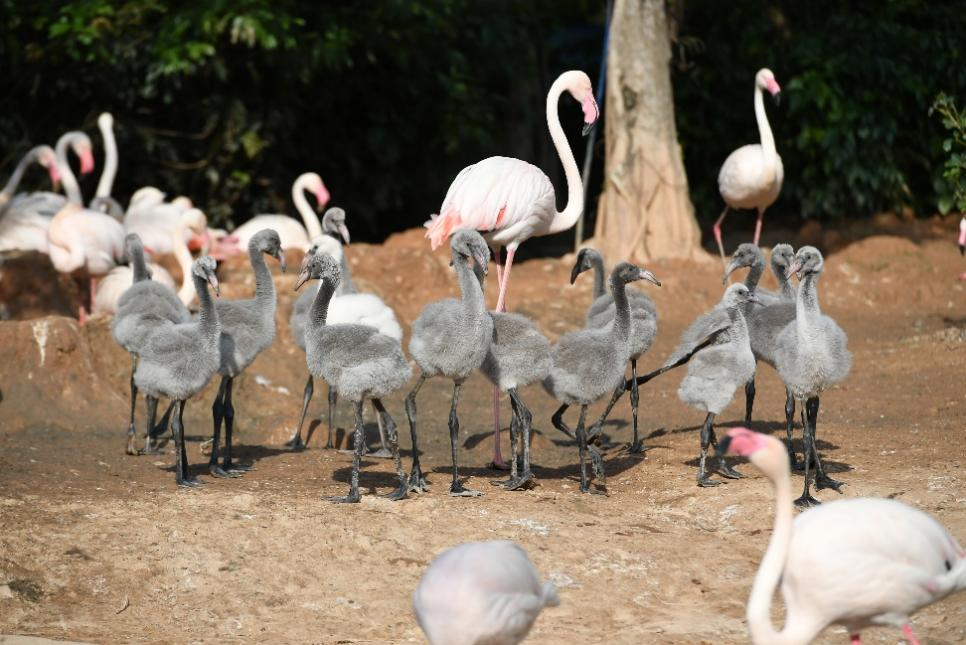
Children listen to keepers explain how flamingo chicks start out gray and turn pink as they grow, mix special feed under guidance, and learn fun facts about crop milk, molting and pigment deposition.

Photo taken at Chimelong Birds Park, Guangzhou
·Flamingo Hut · Flip-card Q&A
Questions on the front, answers on the back. Visitors look at specimens, identify daily diet ingredients, and discover that “feather color comes from pigments in food.”
·Feeding experience at Pink Lake, Qingyuan
At Flamingo Town, visitors observe preening, standing on one leg and group vigilance up close, and record “three behaviors I saw today.”
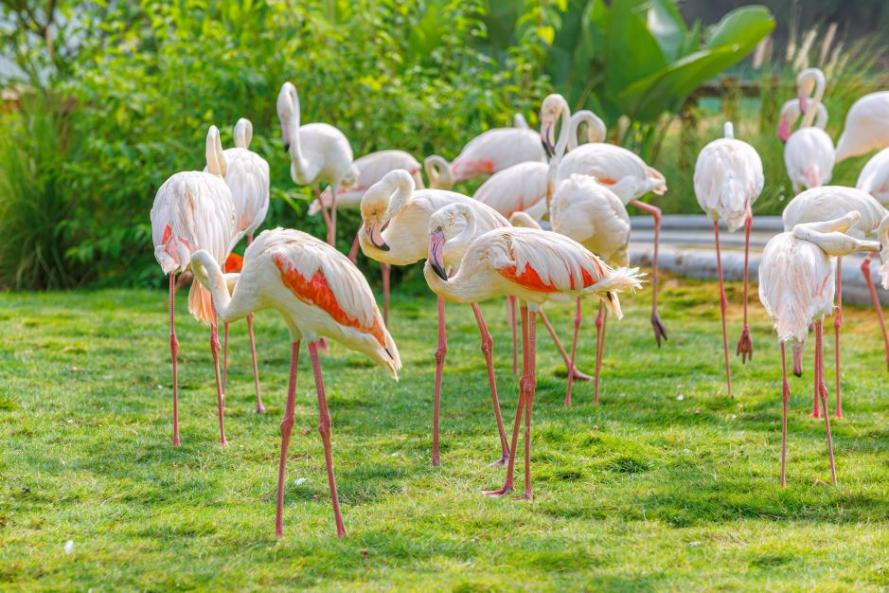
·Bird Academy and study programs
Regular classes are held at the Guangzhou and Qingyuan parks. During Bird Love Week and Wetland Day, these classes are also brought into schools, guiding children from “knowing a bird” to “understanding a wetland.”
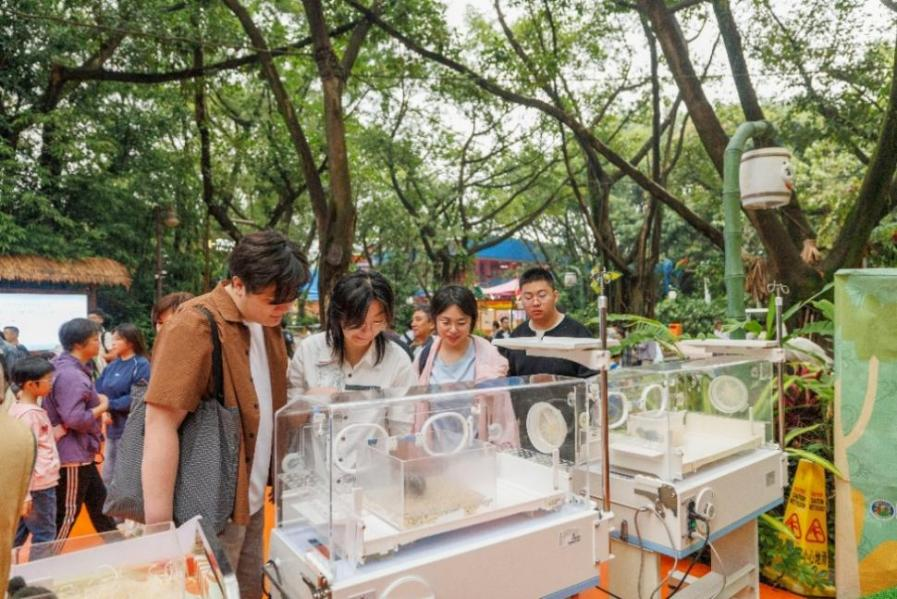
Species Conservation: Chimelong Builds One of Asia’s Leading Flamingo Ex-situ Conservation Populations
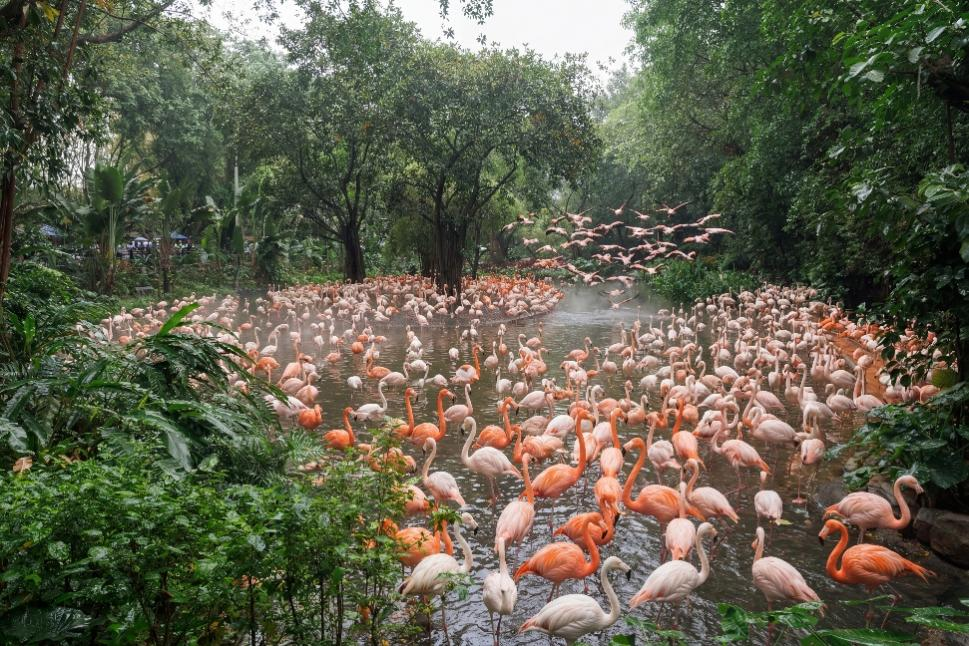
Chimelong has more than 2,000 flamingos, making it the theme park with the largest flamingo population in Asia. The exhibit simulates a native saltwater wetland environment, creating open shallow shores and regulating suitable water quality and light conditions to meet flamingos’ needs for foraging, activity and breeding.
In January 2020, Chimelong Birds Park completed China’s first flight display of a breeding flamingo population. The project features a dedicated runway, take-off platform and open water surface, gradually guiding the flock to form group flight behavior.
Breeding and Research: An Integrated Conservation System
·Captive Breeding and Population Management
Each year, the park steadily breeds dozens of flamingo chicks. Chicks are grayish-brown at birth, gradually turn pink between 3 and 4 years old, and reach sexual maturity at 5 to 6 years old. During the breeding season, the full process of pairing, nest building, incubation and chick rearing is tracked, with care plans adjusted dynamically.
·Nutritional Regulation and Health Management
Pink feathers in flamingos come from carotenoids in their food. Special flamingo feed has been independently developed by the conservation team, with optimized nutritional ratios and targeted prevention and control of metabolic diseases such as gout, safeguarding the health and stability of the large population.
·Technical Breakthroughs
Special transport crates for flamingos have been developed to accommodate their long legs and susceptibility to stress, reducing the risk of fractures and stress injuries during transfer. A sex identification technique for large populations based on morphological indicators has also been established. Simple and low-cost, the method supports breeding pairing and studbook management.
Rescue and release: From the park to wetlands and classrooms
Flamingos are a signature of Chimelong conservation, but conservation work has long extended beyond park boundaries.
·Bird rescue and release
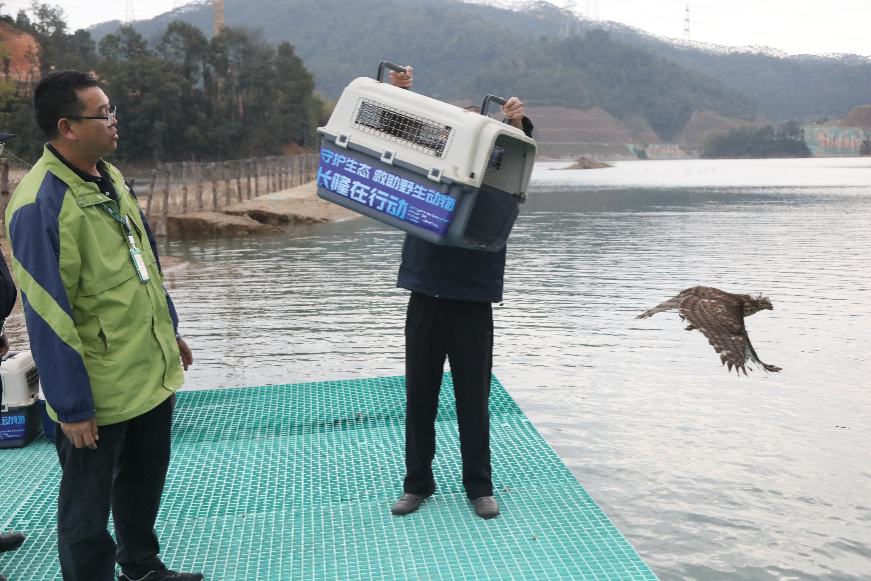
The Chimelong Qingyuan Wildlife Rescue Center has received and rescued more than 2,400 birds since 2025. During Bird Love Week in 2026, 23 rehabilitated birds were released in batches, including Little Egrets, Besras, Black-crowned Night Herons and Common Moorhens, among them several Class II nationally protected species.
·Breakthroughs in Breeding Rare Birds
Crested ibis populations rank first in South China, grass owls have broken through breeding bottlenecks, and emperor penguins have repeatedly set records for breeding at the lowest latitude in Asia—experience gained from flamingos is now benefiting more “difficult-to-raise” birds.
·Science Education in Schools
“Nature Fun at Chimelong” and “Bird Exploration Season” have reached schools in the Greater Bay Area and Hong Kong, using real conservation stories to teach wetland protection. These programs have reached over 300 million people cumulatively.
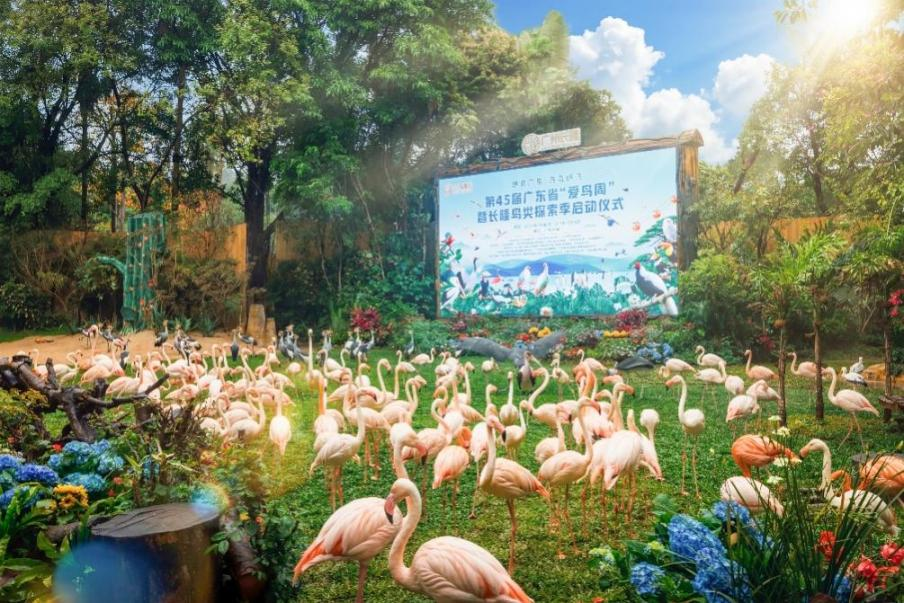
Protecting flamingos is not just about raising a flock of pink-feathered birds. It is about using one bird to explain to the public the close connections among wetlands, food chains and people. When you raise your camera to capture this flowing pink, you are also gently gazing into the future of wetlands.
Where to see flamingos at Chimelong?
·Chimelong Birds Park, Guangzhou · Flamingo Island
Home to one of Asia’s leading display populations of flamingos. In “A Symphony of Birds,” visitors can witness flocks soaring into the sky together, with pink-white and vivid red birds in one frame.
·Chimelong Safari Park, Guangzhou (South Gate Exhibit) · Flamingo Exhibit
Equipped with a science classroom, the flamingo exhibit allows visitors to listen to vivid conservation stories beyond viewing.
·Chimelong Wildlife Safari, Qingyuan · Pink Lake (Flamingo Town)
Recreating a native wetland water system, the area creates an immersive habitat. Visitors can observe up close from viewing platforms and take part in scheduled feeding experiences.
·Chimelong Forest Kingdom, Qingyuan
Exhibits are arranged around natural habitats, making it a great place for family nature observation.
·Chimelong Spaceship, Zhuhai
Flamingo-themed parades are regularly staged, with pink flocks moving through the park—a dreamy photo opportunity.