







TOP
Giraffes
Giraffes are the tallest land animals on Earth, inhabiting tropical and subtropical savannas and scrublands of Africa. Seven cervical vertebrae support a neck up to two meters long; a 45-centimeter tongue is specially adapted to strip tender acacia leaves; and their coat patterns, like fingerprints, are never repeated. In the wild, giraffes are threatened by habitat loss, savanna fragmentation and illegal hunting. IUCN assesses them as Vulnerable (VU), and they are listed in CITES Appendix II.
Storytelling: Bringing Savanna Life into View
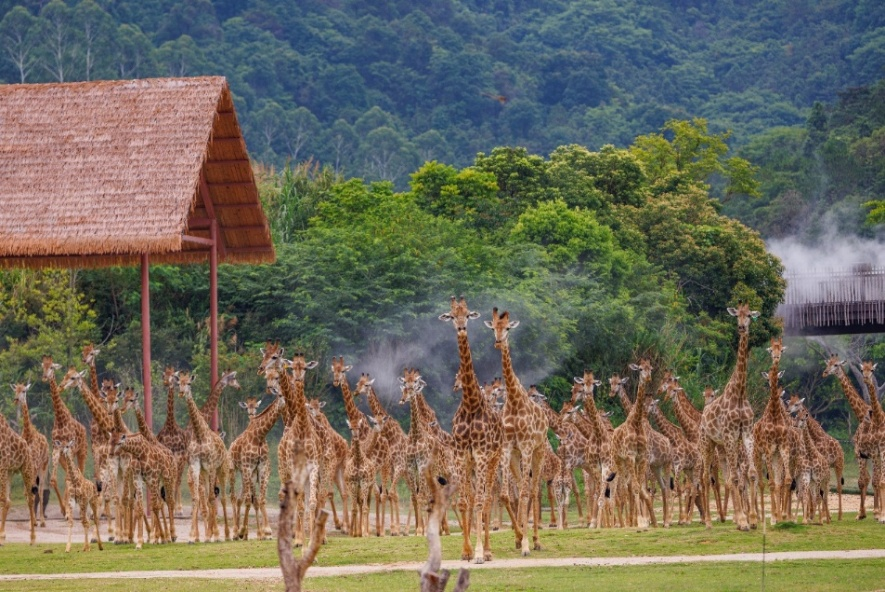
In China, giraffes are deeply connected with the qilin, an auspicious beast in ancient texts. Their appearance and habits closely match descriptions of the qilin, and the Somali word “Giri” sounds close to “qilin.” Zheng He’s voyages brought giraffes back to China, as recorded in Ma Huan’s Yingya Shenglan. This cultural thread makes giraffes a natural vehicle for nature education.
·Giraffe Science Education Station
An ongoing science education point in the giraffe activity area, with ongoing talks on the giraffe’s specialized circulatory system, long-tongue feeding, social behavior and habitat loss, supported by leaf specimens and illustrated science panels to share knowledge about how the species survives.
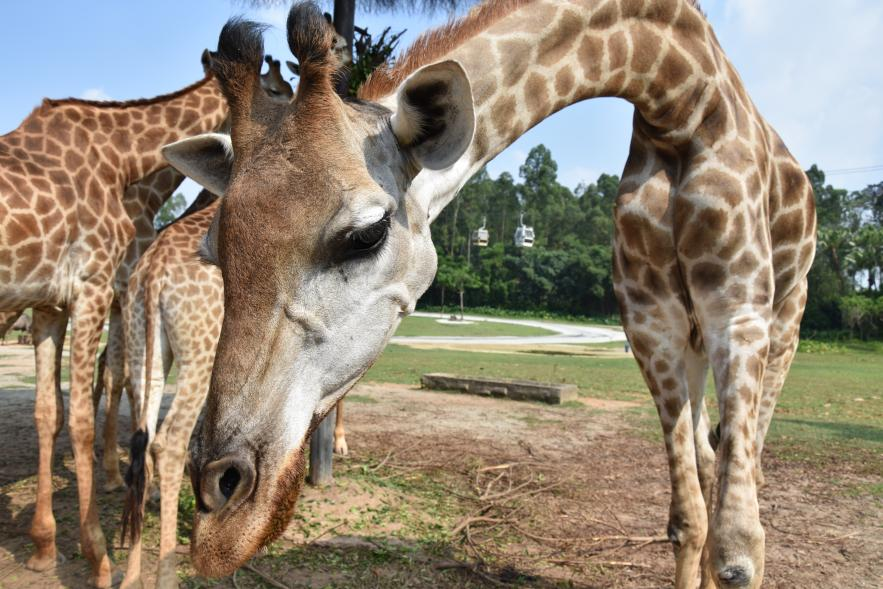
·Leaf Interaction at Giraffe Squar
On a dedicated platform, we hold out fresh tender branches and observe giraffes bending down to feed, curling their tongues to gather leaves and keeping their ears alert, understanding the adaptations that let them feed on acacia without being injured by thorns.
·“Jungle Discovery” Model-Based Science Class
Using skull and hoof models and blood-pressure teaching aids, the class explains blood pressure regulation in the giraffe’s long neck and the ruminant digestion of its four-chambered stomach.
·Giraffe Behavior Observation and Learning
Feeding, social spacing, calves following adults and other behaviors can be recorded while riding the train through the savanna habitat. Regular nature education classes turn observation data into learning materials.
Conservation Breakthroughs: Building a Large Giraffe Population
in China
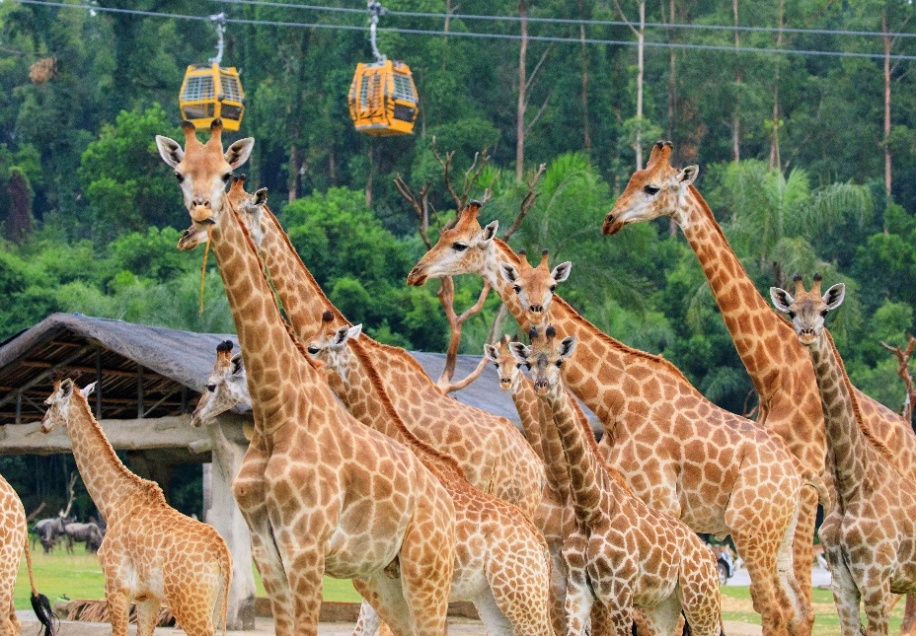
Chimelong has one of China’s largest giraffe populations, with more than 200 animals covering the characteristics of four types—Masai, reticulated, southern and northern giraffes—with Masai and reticulated giraffes as the main groups. Qingyuan Chimelong has established the largest ex-situ giraffe population outside Africa. Habitat is designed according to savanna ecology: open spaces with acacia plants, and a mosaic of sandy soil and grassland suited to giraffes’ natural habit of feeding while walking and raising their heads to scan at any time.
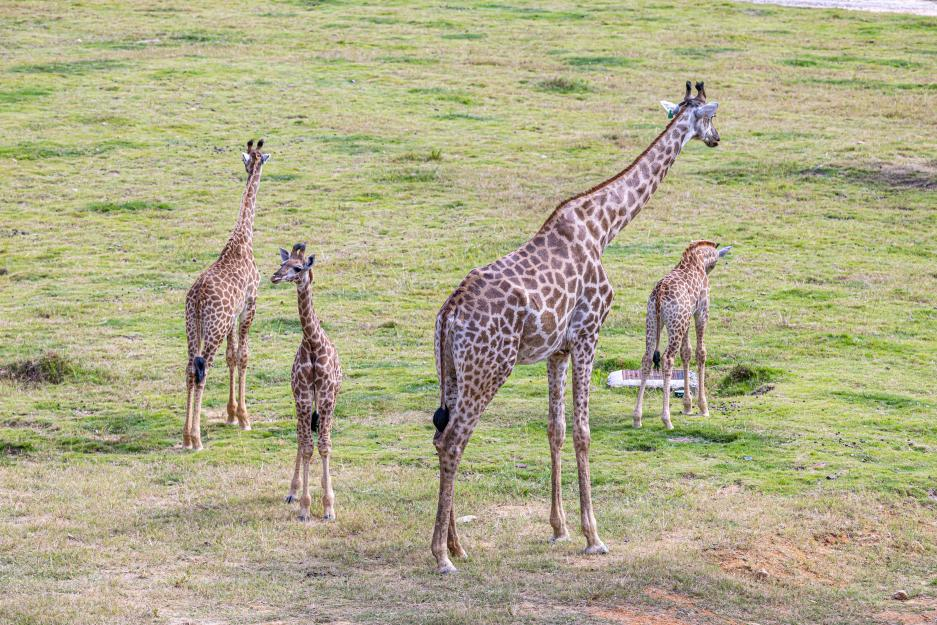
Chimelong keepers have found that giraffe pregnancy lasts 14–15 months and that calves are nearly 2 meters tall at birth and must stand on their own within half an hour. In May 2019, one calf lacked sufficient milk from its mother and showed no maternal-care instinct, so the conservation team immediately provided supplemental milk and hand-rearing and helped it integrate smoothly into the herd. Another giraffe, “Shuangxi,” was stepped on by its mother at birth and injured its hind leg. Keepers cared for it around the clock, and within just over a month it recovered and could run. It has now bred offspring and lives freely in the East Africa Savanna area of the self-drive zone.
Scientific Research: Tackling Conservation Challenges for Large Herbivores
·Population Breeding and Studbook Management
We have mastered perinatal care and birth monitoring techniques for giraffes. In a single season in 2019, more than 20 calves were bred. We have established a standardized formula-milk hand-rearing protocol for situations such as inadequate maternal care or abandonment. Individual records are kept, documenting feeding, hoof condition, body weight and other information, and scientific pairing is used to avoid inbreeding.
At the same time, we work with the herbivore nutrition team at South China Agricultural University on a series of collaborative giraffe conservation research projects, focusing on the development and use of giraffe milk replacer and nutritional regulation during the perinatal period. Initial work has developed a milk replacer formula for giraffe calves, assessed the nutritional suitability of zebra milk from the park’s own zebras as an alternative milk source, compared the nutrient composition of maternal milk and candidate milks, and simultaneously monitored calf growth, blood biochemistry and gut microbiota to optimize hand-feeding protocols. Follow-up work focuses on integrated mother–infant precision care, covering nutritional regulation of mothers during the perinatal period, monitoring of mother–infant pairing behavior, and integrated assessment of calf growth and gut health. This provides nutritional and theoretical support for breeding care and hand-rearing systems.
·Nutrition and Environmental Regulation
We have screened and domesticated local forage plants such as black locust and acacia to ensure a stable supply of feeding branches. Diets combine pellets, alfalfa meal and Chinese herbal medicines to support gut health. Building on the above projects, we are investigating the effects of graded concentrate feeding during the perinatal period and plant-derived capsaicin additives on maternal antioxidant capacity, rumen fermentation homeostasis and postpartum lactation performance. Wood shavings bedding combined with negative-pressure ventilation reduces the risk of hoof disease and respiratory disease.
·Low-Stress Medical Care and Rehabilitation
A compression treatment cage allows low-stress blood collection, vaccination and health examinations. We hold a national patent for a “A Restraint Cage and a Giraffe Physiotherapy Enclosure” We completed China’s first diagnosis and treatment of hindlimb knee hyperflexion in a juvenile giraffe, and the animal survived successfully to adulthood.
Sharing Conservation Knowledge: Passing On Breeding Experience and Ecological Insights
·Accumulated Breeding Expertise
Qingyuan Chimelong has built a Herbivore Rescue and Breeding Base. Focusing on giraffes, African elephants and black rhinos, it has developed four technical systems—genetic management, precision nutrition, disease prevention and control, and habitat maintenance—supporting the survival of ex-itu populations of several internationally recognized difficult-to-raise species.
·Themed Science Education Events
During the 2025 Wildlife Conservation Month, Qingyuan Chimelong launched “African Adventure: Tracking the Five Iconic Animals,” incorporating giraffes into themed science education. This science education activity explains their unique physiological features and the threats they face from shrinking wild habitat, introduces Chimelong’s ex-itu giraffe conservation achievements, and calls on the public to support African savanna conservation.
·Life Classroom · Ecological Education in Schools
Guangdong’s “First Lesson of the New Semester” featured giraffes and other animals, teaching students across the province about ex situ conservation, ecological restoration and life education. The Qingyuan base, restored from mined land, now supports more than 300 species and over 10,000 wild animals. Giraffes are the most vivid “ecological restoration sample” on this recreated savanna.
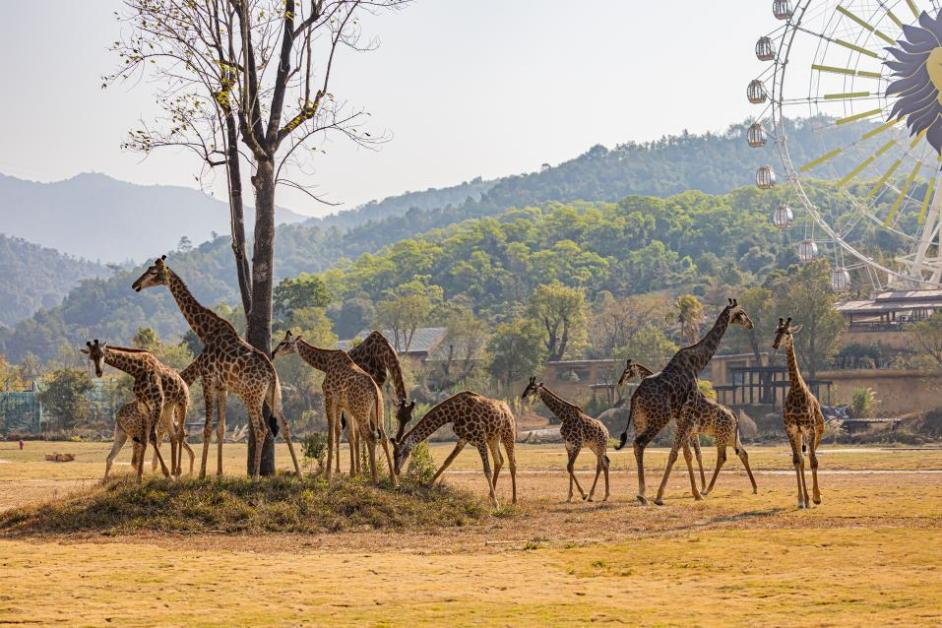
With technical expertise as the foundation and science communication as the bridge, Chimelong continues to share ex situ conservation solutions, turning conservation experience in the park into support for broader ecological restoration.
Savanna Trail: Meeting Giraffes from Multiple Perspectives
at Chimelong
·Chimelong Safari Park, Guangzhou · Giraffe Square
This signature interactive spot offers close-up views of giraffes feeding with their long tongues. A nearby science corner explains the secrets behind giraffe coat patterns and shares conservation stories.
·Guangzhou/Qingyuan Chimelong Safari · Self-Drive Safari or Wild Safari Truck
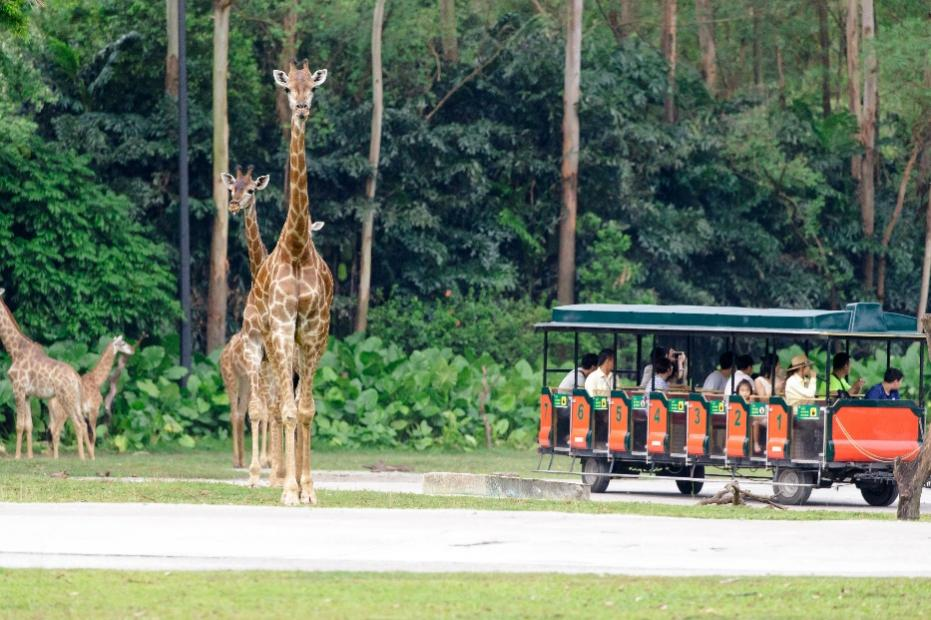
The roadside recreates the East African savanna and is an excellent route for encountering large giraffe herds. Vehicles move slowly while giraffes stroll and rest freely, offering an immersive savanna atmosphere; quiet observation is encouraged.
·Chimelong Safari Park, Guangzhou · Train Tour Route
The route passes through giraffe activity areas, with onboard guides introducing giraffe population characteristics, wild threats and conservation stories along the way.
·Qingyuan Giraffe Castle Hotel
Features the Gaogao Reception Hall and Yuanyuan Giraffe Viewing Deck. The viewing deck is ideal for looking out over the herd, with a strong savanna atmosphere at dawn and dusk. Gaogao and Yuanyuan are the hotel’s own storybook companions, quietly keeping watch and sharing in the giraffes’ leisurely savanna days.
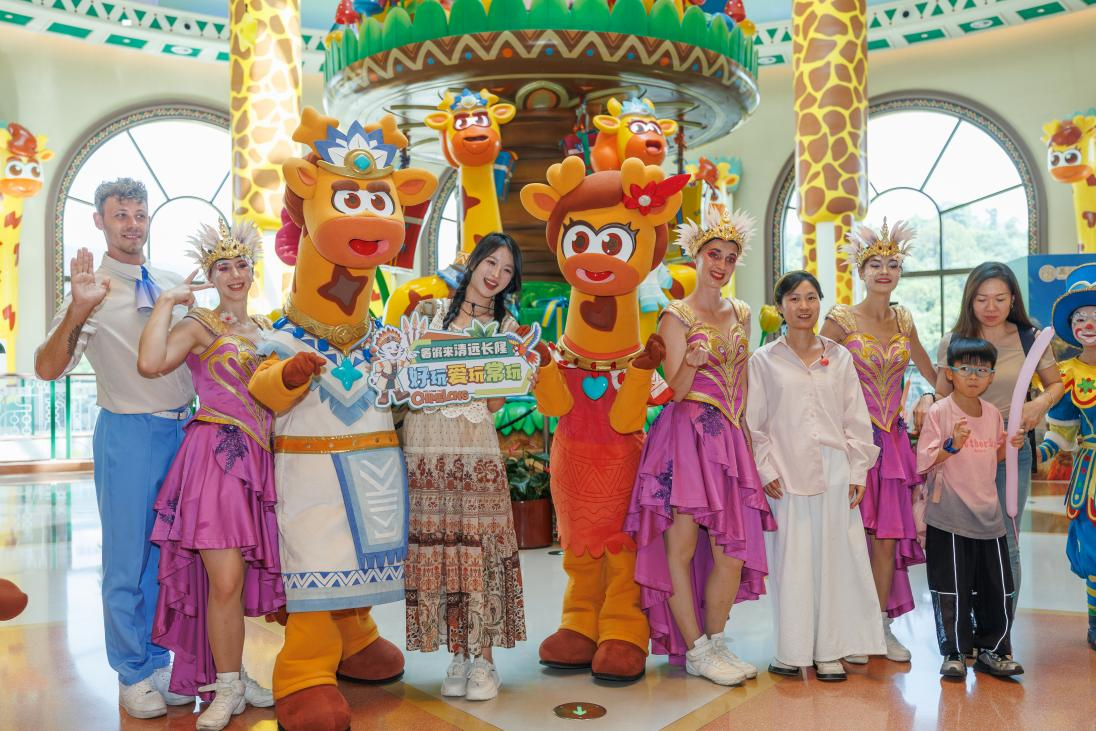
Hand a leaf to a giraffe, listen to Shuangxi’s growth story, and the point becomes clear: protecting giraffes means protecting the vast African savanna. When that leaf is curled away, what lingers is not only “it is very tall,” but also why the African savanna must not be left with nothing but bare earth.